Imagine coming home after a long day to the aroma of a perfectly cooked meal waiting for you. No last-minute cooking stress, no takeout temptation, just a hot, delicious dinner ready to serve. That’s the magic of the Crock-Pot Slow Cooker—the original slow cooker that has been transforming busy kitchens since 1971.
But does this classic appliance still hold up in today’s modern kitchen? With pressure cookers and Instant Pots dominating the market, you might wonder if a traditional slow cooker is worth the counter space. After extensive research and analysis of hundreds of customer experiences, we’re delving into what makes the Crock-Pot Slow Cooker a timeless kitchen essential.
In this comprehensive review, we’ll explore everything about the Crock-Pot Slow Cooker—its features, performance, authentic customer experiences, pros and cons, and expert tips for getting the most out of this beloved appliance.
Whether you’re a busy parent, a meal prep enthusiast, or someone who loves the simplicity of slow cooking, this review will help you decide if the Crock-pot Slow Cooker deserves a permanent spot in your kitchen.
What Makes Slow Cooking Special?
Slow cooking is fundamentally different from other cooking methods. Before we dive into the Crock-Pot specifically, let’s understand why slow cooking has remained popular for over 50 years.
The Science of Slow and Low
Low temperatures over extended periods break down tough cuts of meat into tender, fall-apart deliciousness. Connective tissues dissolve, flavors meld together, and even inexpensive cuts of meat become restaurant-quality meals. This gentle cooking method is impossible to replicate with quick-cooking appliances.
Set It and Forget It
True slow cookers require minimal supervision. Unlike stovetop cooking that demands attention, or pressure cookers with specific timing, slow cookers let you add ingredients in the morning and return 8 hours later to a finished meal. It’s cooking that fits your schedule, not the other way around.
Energy Efficiency
Slow cookers use less electricity than your oven. Running a slow cooker for 8 hours costs approximately the same as running your oven for one hour. For budget-conscious cooks, that’s significant savings over time.
Enhanced Flavors
Slow cooking develops deep, complex flavors. The long cooking time allows spices and ingredients to fully infuse into your dish, creating rich, layered tastes that quick cooking methods can’t achieve.
Crock-Pot Slow Cooker: Complete Product Review
Product Description
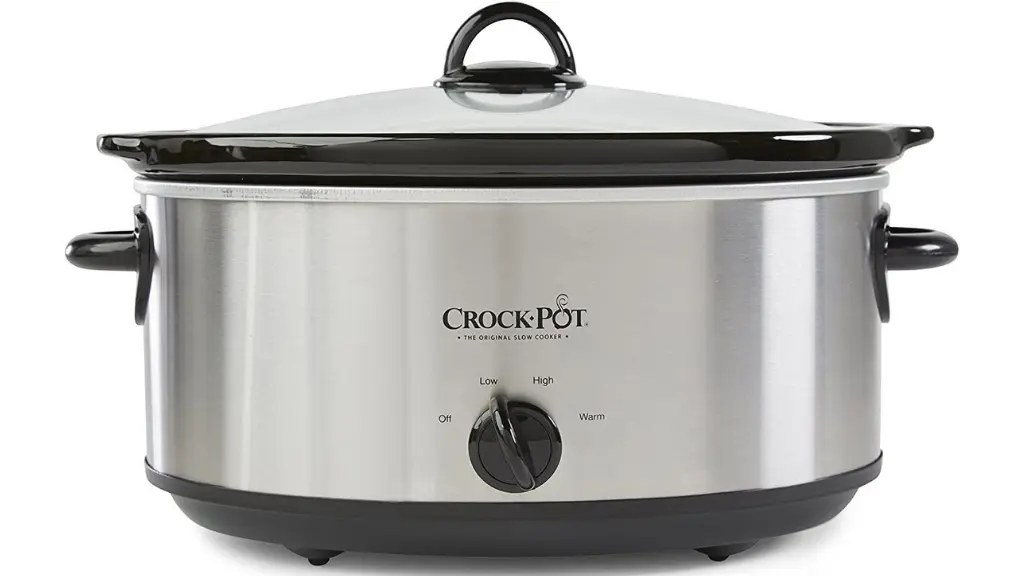
The Crock-pot Slow Cooker features a durable stoneware cooking pot housed in a metal heating base with adjustable temperature settings. The Stoneware insert distributes heat evenly and retains warmth for serving, while the heating element wraps around the base for consistent, gentle cooking.
Most models include Low, High, and Warm settings, which are controlled by a simple dial or digital interface.
The removable stoneware pot is dishwasher-safe for easy cleanup, and the tempered glass lid allows you to monitor cooking progress without releasing heat.
The exterior remains cool to the touch for safety, while the interior reaches temperatures between 200°F and 300°F, depending on the Setting. This design has remained essentially unchanged for decades—because it works.
Key Features
- Capacity Options: Available in 2, 3, 4, 6, 7, and 8-quart sizes
- Temperature Settings: Low (200°F), High (300°F), Warm (165°F)
- Cooking Pot: Removable Stoneware insert with even heat distribution
- Lid: Tempered glass with a tight seal to retain moisture and heat
- Control Type: Manual dial or digital programmable (model dependent)
- Exterior: Cool-touch housing for safe handling
- Shape Options: Round or oval (oval fits roasts and whole chickens better)
- Dishwasher-Safe: Stoneware pot and glass lid
- Power: 200-300 watts (Energy efficient)
- Timer: Manual models run continuously; digital models have programmable timers
- Auto-Warm Function: Automatically switches to warm after cooking time (digital models)
- Locking Lid: Some models include clips for transport
- Handles: Side handles on both base and Stoneware for safe handling
- Cord Length: Typically 24-30 inches
- Warranty: 1-year limited warranty (varies by model)
What Makes the Crock-pot Special
The Crock-pot isn’t just a slow cooker—it’s THE slow cooker that defined the category. The brand name has become synonymous with slow cooking, much like Kleenex is to tissues. But beyond brand recognition, there are real reasons this appliance has remained a kitchen staple for over 50 years.
The Stoneware Advantage
That heavy ceramic insert isn’t just for looks. Stoneware distributes heat more evenly than metal pots, eliminating hot spots that can cause food to burn. It also retains heat beautifully, keeping your meal warm for hours after cooking ends—perfect for parties and potlucks.
The Stoneware’s thermal mass means once it reaches a temperature, it maintains that heat steadily without fluctuating. This consistency is crucial for proper slow cooking, ensuring your pot roast or chili develops the right texture and flavor.
Foolproof Simplicity
Three settings. That’s it. In an age of appliances with 20+ functions and complicated menus, the Crock-pot’s simplicity is refreshing. Low for all-day cooking (8-10 hours), High for faster meals (4-6 hours), and Warm for keeping food ready until serving. Even a complete beginner can’t mess this up.
There’s no pressure release to understand, no sauté function to master, no complex timing to calculate. You literally put ingredients in, turn it on, and walk away. It’s cooking stripped down to its most accessible form.
Unattended Cooking Confidence
The Crock-pot is designed to be left alone. Unlike stovetops that present fire hazards or pressure cookers that require careful monitoring, the Crock-pot’s low wattage and insulated design make it safe to run. At the same time, you’re at work, asleep, or out running errands.
Millions of people start their Crock-pot in the morning and return 8-10 hours later to perfectly cooked meals. That level of trust and safety is built into every aspect of the design—from the cool-touch exterior to the reliable heating element.
The Tenderizing Magic
Tough, inexpensive cuts of meat become your best friend. Chuck roast, pork shoulder, and chicken thighs—cuts that would be chewy or dry with quick cooking methods — transform into tender, flavorful perfection in a Crock-Pot. The long, slow cooking breaks down collagen and connective tissue, resulting in meat so tender it falls apart at the touch of a fork.
This means you can serve impressive, delicious meals while spending less on ingredients. A $10 chuck roast in a Crock-pot rivals a $40 restaurant pot roast.
Pros and Cons
| Pros | Cons |
| ✅ Effortless operation—anyone can use it | ❌ Requires long cooking times (4-10 hours) |
| ✅ Unattended cooking is completely safe | ❌ Can’t sauté or brown ingredients (needs a separate pan) |
| ✅ Tenderizes tough, inexpensive cuts of meat | ❌ Limited to slow-cooked dishes (no versatility) |
| ✅ Energy efficient (200-300 watts) | ❌ Not ideal for vegetables that need a crisp texture |
| ✅ Develops deep, rich flavors naturally | ❌ Takes up counter space |
| ✅ Dishwasher-safe stoneware pot | ❌ Stoneware can crack if temperature-shocked |
| ✅ Perfect for meal prep and batch cooking | ❌ Digital models are more expensive than manual ones. |
| ✅ Most affordable slow cooking option | ❌ Glass lid not oven-safe (Stoneware is) |
| ✅ Keeps food warm for serving | ❌ Can overcook if timing isn’t right |
| ✅ Proven reliability and durability | ❌ Slower than pressure cookers for the same dishes |
| ✅ Available in many sizes for different needs | ❌ Some liquid evaporation can occur on High Setting |
What Customers Are Saying
Based on thousands of customer reviews from multiple retailers, the Crock-Pot Slow Cooker consistently earns praise for its reliability and simplicity.
The most common positive feedback includes:
“Best kitchen investment I ever made,” with many customers saying “I use it 2-3 times per week,” and “don’t know how I cooked before getting one.” Users love the convenience: “I start it before work and dinner is ready when I get home—life changing for busy parents.”
The simplicity gets consistent praise: “No complicated buttons or settings to figure out—just turn it on and go.” Many mention, “My 70-year-old mother uses it with no problems,” and “Even my teenager can make dinner in this thing.”
Tenderizing performance impresses users: “Chuck roast was so tender it fell apart,” and “chicken comes out incredibly juicy, never dry.” Budget-conscious cooks appreciate that “I can use cheap cuts of meat and they taste amazing.”
The most frequently mentioned concerns include:
Timing can be tricky for beginners: “First few meals were overcooked while I learned the timing,” though most add “but once you get the hang of it, it’s perfect every time.”
Some users wish for more features: “Would love a sauté function built in” and “wish I could brown meat in the same pot.” However, purists counter that “the simplicity is exactly why it works so well.”
The Stoneware requires care: “Cracked my insert by putting it in cold water while hot—learned that lesson the hard way.” Most agree, “as long as you don’t temperature-shock it, the stoneware lasts forever.”
A few note the cooking time: “Not good if you forget to start it in the morning—you need to plan.” However, most feel “the tradeoff for hands-off cooking is totally worth it.”
Overall satisfaction is overwhelmingly positive, with most reviewers saying “I’ll never give up my Crock-pot” and “this will last me decades—it’s built to last.”
Best For
The Crock-pot Slow Cooker is ideal for:
- Busy professionals who want dinner ready when they get home
- Parents with hectic schedules juggling kids and activities
- Meal preppers who cook large batches for the week
- Budget-conscious cooks who want to use inexpensive ingredients
- Beginners who wish to learn foolproof cooking with no learning curve
- College students with limited cooking skills and equipment
- Seniors who want simple, safe cooking without complications
- Anyone hosting potlucks (keeps food warm for hours)
- People cooking for crowds (large capacity feeds 8-10 people)
- Comfort food lovers (perfect for stews, roasts, chilis, soups)
Not Ideal For
The Crock-Pot Slow Cooker may not be the best choice if you:
- Need meals ready in 30 minutes (pressure cooker is better)
- Want to sauté, sear, or brown in the same pot
- Prefer crisp vegetables (slow cooking softens everything)
- Cook mostly for one person (the smallest 2-quart size might work)
- Don’t plan meals (requires morning prep)
- Want multi-functionality (air fry, pressure cook, etc.)
- Have minimal counter space
- Rarely cook soups, stews, roasts, or braises
Size Guide: Which Capacity Is Right for You?
Choosing the right size Crock-pot is crucial for success. Too small and you’re constantly cooking in batches; too large and small portions don’t cook properly.
2-3 Quart (Small)
Best for: Singles, couples, dips, side dishes, and small batches. Serves: 1-2 people for main dishes, 4-6 for dips. Perfect for: Appetizers, oatmeal, small roasts, couples’ dinners
4-5 Quart (Medium)
Best for: Small families (2-4 people), everyday cooking. Serves: 3-4 people generously. Perfect for: Most recipes, whole chickens, standard roasts, family dinners
6-7 Quart (Large)
Best for: Families (4-6 people), meal prep, entertaining. Serves: 5-7 people comfortably. Perfect for: Batch cooking, large roasts, party portions, leftovers for lunches
8+ Quart (Extra Large)
Best for: Large families (8+ people), big gatherings, serious meal prep. Serves: 8-10+ people. Perfect for: Holiday dinners, potlucks, cooking once for multiple meals
Perfect Dishes for Your Crock-pot Slow Cooker
The Crock-pot excels at specific types of dishes. Here’s what it does best:
Soups and Stews
This is where the Crock-pot truly shines. Long, slow simmering develops incredibly rich broths and allows flavors to meld beautifully. Try beef stew, chicken noodle soup, chili, minestrone, or potato soup.
Pot Roasts and Braised Meats
Tough cuts of beef, pork, or lamb become fork-tender. The Crock-pot is famous for pot roast, but also try pulled pork, beef brisket, short ribs, or lamb shanks.
Whole Chickens
An oval Crock-pot fits a 4-5 pound chicken perfectly. The result is incredibly moist meat with minimal effort. Season it, set it, and return to rotisserie-quality Chicken.
Beans and Legumes
Dried beans cook perfectly without pre-soaking (though soaking reduces cooking time). Make baked beans, black bean soup, lentil curry, or chickpea stew.
Breakfast Dishes
Overnight oatmeal is a game-changer. Add oats, milk, and toppings before bed, and wake up to a hot breakfast. Also, try breakfast casseroles or French toast casserole.
Desserts
Yes, you can make desserts! The Crock-pot is excellent for bread pudding, chocolate lava cake, apple crisp, rice pudding, and even cheesecake.
Dips and Appetizers
Keep party food warm for hours. Queso dip, spinach artichoke dip, meatballs, buffalo chicken dip, and hot wings stay at the perfect serving temperature.
Mastering Your Crock-pot Slow Cooker:
Even though slow cooking is simple, these expert tips ensure perfect results every time.
1. Brown Your Meat First (Optional But Recommended)
Searing meat in a skillet before slow cooking adds incredible depth of flavor. That caramelized crust (the Maillard reaction) creates complex, savory notes that slow cooking alone can’t achieve. It’s an extra step, but your taste buds will thank you.
2. Layer Ingredients Strategically
Place root vegetables at the bottom, and meat on top. Vegetables take longer to cook than meat in a slow cooker, so placing them closest to the heat source ensures everything finishes together. Potatoes, carrots, and onions are placed on the bottom; the meat is placed on top.
3. Don’t Overfill
Fill your Crock-pot 1/2 to 3/4 full for best results. Too little food cooks too fast and can dry out. Excessive food intake can hinder proper heat circulation, leading to uneven cooking or undercooked food.
4. Resist the Urge to Peek
Every time you lift the lid, you add 15-20 minutes to cooking time. Heat escapes quickly, and slow cookers take time to recover that lost temperature. Only open the lid when necessary.
5. Add Dairy at the End
Milk, cream, cheese, and sour cream can curdle or separate during long cooking. Add these ingredients in the last 30 minutes of cooking for creamy, smooth results.
6. Fresh Herbs Go In Late, Dried Early
Dried herbs release flavor slowly—add them at the start. Fresh herbs lose potency over long cooking—add them in the last 30 minutes for bright, fresh flavor.
7. Thicken Sauces at the End
Long cooking creates thin, watery sauces. In the last 30 minutes, remove the lid, turn to High, and let the liquid reduce. Or make a cornstarch slurry (1 tablespoon cornstarch + 2 tablespoons cold water) and stir it in.
8. Don’t Temperature-Shock the Stoneware
Never put a hot stoneware insert into cold water or on a cold surface. The sudden temperature change can cause cracking. Let it cool gradually, or run warm water over it before washing.
9. Use the Right Amount of Liquid
Slow cookers don’t evaporate much liquid. Use less liquid than stovetop recipes call for—about 1/2 to 2/3 the amount. Ingredients also release moisture during cooking.
10. Convert Recipes with This Formula
Stovetop recipe = Crock-pot on Low for 8-10 hours or High for 4-6 hours. Oven recipe: 325°F, Low for 8 hours or High for 4 hours. Oven recipe at 350°F or higher: High for 4-6 hours.
Cooking Time Guide for Common Dishes
Low Setting (200°F) – 8-10 Hours
| Dish | Time | Notes |
| Pot Roast (3-4 lbs) | 8-10 hours | Until fork-tender |
| Pulled Pork (4-5 lbs) | 10-12 hours | Shreds easily when done |
| Beef Stew | 8-9 hours | Vegetables tender, meat falling apart |
| Whole Chicken (4-5 lbs) | 7-8 hours | Internal temp 165°F |
| Chili | 8-10 hours | Flavors fully developed |
| Baked Beans | 8-10 hours | Beans completely tender |
| Chicken Noodle Soup | 6-8 hours | Add noodles for the last 30 min |
High Setting (300°F) – 4-6 Hours
| Dish | Time | Notes |
| Pot Roast (3-4 lbs) | 5-6 hours | Faster but still tender |
| Pulled Pork (4-5 lbs) | 6-7 hours | Check for easy shredding |
| Beef Stew | 4-5 hours | Good for same-day cooking |
| Whole Chicken (4-5 lbs) | 4-5 hours | Check the temp at 4 hours |
| Chili | 4-6 hours | Still delicious, less depth |
| Meatballs | 4-5 hours | Frozen meatballs work great |
| Mac and Cheese | 2-3 hours | Stir occasionally |
Note: Times are approximate. Always check meat with a thermometer (165°F for poultry, 145°F for pork, 160°F for ground meat).
Maintenance and Care Tips
Your Crock-pot can last decades with proper care. Follow these maintenance tips for longevity.
Daily Cleaning
- Let Stoneware cool before washing (or use warm water, not cold)
- Wash the Stoneware and lid in the dishwasher or by hand with dish soap
- Wipe the heating base with a damp cloth (never submerge in water)
- Dry all parts thoroughly before storing
Removing Stubborn Stains
- Fill Stoneware with hot water and 1 cup baking soda, let sit overnight
- For burnt-on food, fill with water and 1/4 cup vinegar, cook on Low for 1-2 hours
- Use non-abrasive sponges only—no steel wool that scratches
Storage
- Store with the lid slightly ajar to prevent odors
- Keep in a dry place away from humidity
- Don’t stack heavy items on top of the Stoneware
Safety Checks
- Inspect the cord regularly for fraying or damage
- Check that the heating element heats evenly (no hot spots)
- Ensure the lid seals properly without cracks
When to Replace
- Stoneware has cracks or chips (can harbor bacteria)
- The heating element doesn’t heat consistently
- The cord is damaged
- Controls don’t function properly
Most Crock-Pots last 10-15 years or longer with proper care and maintenance.
Crock-Pot vs. Other Cooking Methods
How does the Crock-pot stack up against alternatives?
Crock-pot vs. Pressure Cooker (Instant Pot)
- Speed: Pressure cooker wins (1 hour vs 8 hours for pot roast).
- Flavor depth: Crock-pot wins (long cooking develops more decadent flavors).
- Convenience: Crock-pot wins (true set-and-forget)
- Versatility: Pressure cooker wins (sauté, steam, yogurt, etc.)
- Learning curve: Crock-pot wins (more straightforward operation)
- Meat tenderness: Tie (both excellent)
Bottom line: Pressure cookers are faster and more versatile; Crock-pots are simpler and develop deeper flavors.
Crock-pot vs. Dutch Oven
- Convenience: Crock-pot wins (unattended cooking)
- Flavor: Tie (both excellent for braises and stews)
- Versatility: Dutch oven wins (stovetop and oven use)
- Cost: Crock-pot wins (less expensive)
- Portability: Tie (both work for potlucks)
- Skill required: Crock-pot wins (foolproof)
Bottom line: Dutch ovens require more attention but offer a wider range of cooking methods; Crock-Pots are hands-off and foolproof.
Crock-pot vs. Stovetop
- Convenience: Crock-pot wins (no monitoring needed).
- Speed: Stovetop wins (faster cooking)
- Energy use: Crock-pot wins (much more efficient)
- Flavor: Crock-pot wins for braises/stews.
- Versatility: Stovetop wins (any cooking method)
- Safety: Crock-pot wins (can leave unattended)
Bottom line: Stovetops are faster and more versatile; Crock-Pots are safer and more convenient for specific dishes.
Frequently Asked Questions
Can I leave my Crock-pot on while I’m at work?
Yes, that’s precisely what it’s designed for. The Crock-Pot’s low wattage, insulated design, and cool-touch exterior make it safe for unattended operation. Millions of people do this daily. Ensure it’s on a stable, heat-resistant surface, away from flammable materials.
Why is my food watery?
Slow cookers don’t evaporate much liquid. Use less liquid than traditional recipes call for, as ingredients also release moisture during the cooking process. Remove the lid in the last 30 minutes and cook on High to reduce excess liquid.
Can I put frozen meat in the Crock-pot?
Food safety experts recommend thawing first. Frozen meat takes too long to reach a safe temperature (above 140°F), creating a window for bacterial growth. For best results and food safety, thaw meat in the refrigerator overnight before slow cooking.
Do I need to stir during cooking?
No, resist the urge! Opening the lid releases heat and extends cooking time. Slow cookers are designed to cook food evenly without the need for stirring. Only open the lid if a recipe specifically instructs you to do so.
Can the Stoneware go in the oven?
Yes, most Crock-pot stoneware is oven-safe up to 400°F. Check your specific model’s manual. The glass lid is typically not oven-safe. This feature lets you start on the stovetop or finish under the broiler.
How do I prevent Dairy from curdling?
Add dairy products in the last 30 minutes of cooking. Milk, cream, sour cream, and cheese can separate during long cooking. Adding them near the End gives you creamy, smooth results.
Why did my Stoneware crack?
Temperature shock causes cracking. Never put a hot insert into cold water or place a cold insert into a hot base. Always let it cool gradually or transition with warm (not cold) water.
Can I use the Crock-pot for canning?
No, slow cookers don’t reach high enough temperatures for safe canning. Canning requires sustained temperatures of 240°F or higher to kill bacteria. Slow cookers max out around 300°F and don’t maintain consistent enough temperatures for safe food preservation.
Is the Crock-pot Slow Cooker Worth It?
After analyzing features, customer experiences, and real-world performance, here’s our verdict:
The Crock-pot Slow Cooker Excels At:
- Simplicity and ease of use – Anyone can operate it successfully
- Hands-off convenience – True set-and-forget cooking
- Tenderizing tough meats – Transforms inexpensive cuts
- Developing rich, deep flavors – Long cooking creates complexity
- Energy efficiency – Costs pennies per use
- Reliability and durability – Lasts 10-15+ years
- Affordability – One of the most budget-friendly appliances
- Meal prep and batch cooking – Makes large quantities easily
The Crock-Pot Slow Cooker Falls Short On:
- Speed – Requires 4-10 hours of cooking time
- Versatility – Does one thing (slow cooking) only
- Last-minute meals – Requires planning
- Crisp textures – Everything becomes soft and tender
- Browning capability – Can’t sauté or sear
Our Recommendation
For busy households, budget-conscious cooks, and lovers of comfort food, the Crock-Pot Slow Cooker is absolutely worth it. The convenience of starting dinner in the morning and returning to a ready meal is genuinely life-changing for many families. The ability to use inexpensive ingredients and achieve delicious, tender results makes it budget-friendly as well.
However, if you need speed and versatility, consider a pressure cooker instead. If you rarely cook soups, stews, or roasts, the Crock-Pot might not get enough use to justify the counter space.
For most home cooks, though, the Crock-Pot Slow Cooker earns its place as a kitchen essential. Its simplicity, reliability, and proven performance have made it a trusted companion for over 50 years—and that’s not likely to change anytime soon.
Ready to Experience the Crock-Pot Difference?
Join millions of satisfied home cooks who’ve discovered the magic of slow cooking. The Crock-Pot Slow Cooker takes the stress out of dinner planning, makes budget-friendly ingredients taste amazing, and gives you precious time back in your day.
Whether you’re a busy parent, working professional, or anyone who values convenience without sacrificing quality, the Crock-Pot delivers. Start it in the morning, go about your day, and return to the comforting aroma of a home-cooked meal waiting for you.
Click the link below to check current prices, read thousands of verified customer reviews, and discover exclusive bundle deals. Your journey to stress-free, delicious home cooking starts with one simple appliance.
Transform Your Weeknight Dinners Forever
Stop stressing about “what’s for dinner?” every single night. Thousands of families have already discovered how the Crock-Pot Slow Cooker transforms chaotic evenings into relaxing family dinners.
Here’s what changes when you add a Crock-Pot to your kitchen:
- ✓ Dinner is ready when you walk in the door—no last-minute cooking panic
- ✓ You save money using inexpensive cuts of meat that taste incredible
- ✓ Your whole house smells fantastic all day long
- ✓ You gain hours of free time instead of standing over the stove
- ✓ Meal prep becomes simple—cook once, eat multiple times
- ✓ Even cooking beginners create restaurant-quality comfort food
Click the link above to get your Crock-Pot Slow Cooker today. With free shipping options, money-back guarantees, and thousands of 5-star reviews, there’s never been a better time to invest in easier, more delicious home cooking.
Your future self will thank you—starting tomorrow morning when you set it and forget it!