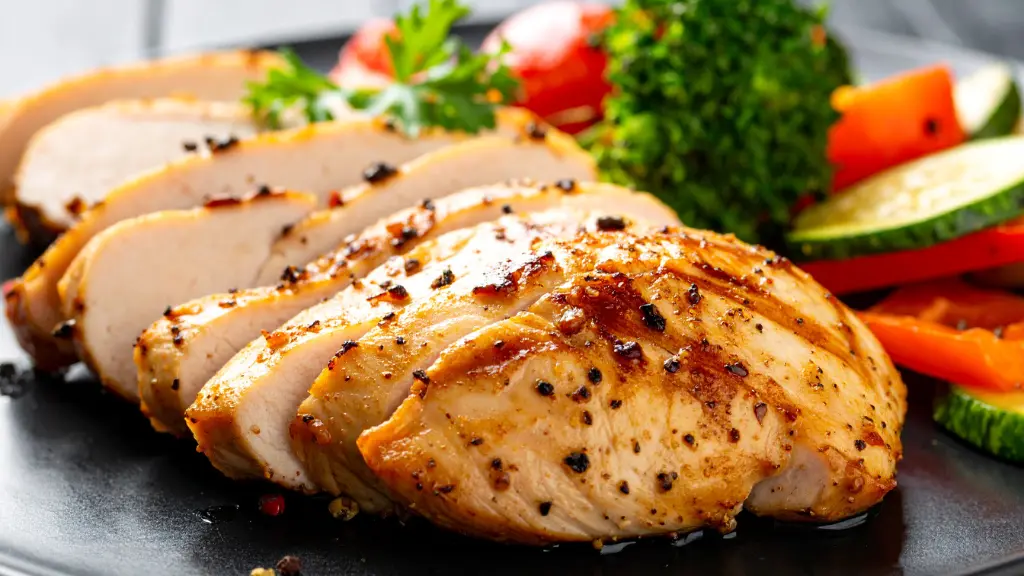
This roasted whole chicken recipe is a lifesaver for busy families who want hearty, comforting food without spending hours in the kitchen. Moist and tender inside with a beautifully crisp, golden skin, it’s infused with a fragrant blend of garlic and herbs that takes me back to the first time I impressed my in-laws—yes, totally intentional!
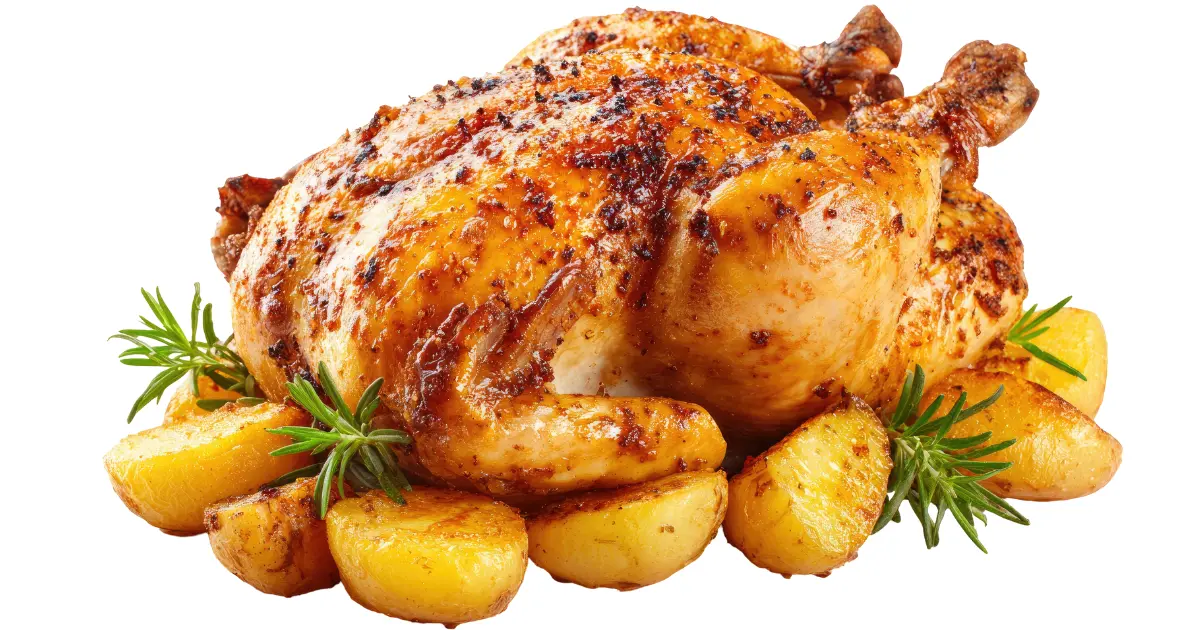
With simple staples like lemon, butter, and rosemary, this beginner-friendly roast transforms any weeknight into a mini holiday feast, minus the stress. Let’s elevate this recipe once again.
What is the Roasted Whole Chicken?
A roasted whole chicken is exactly what it sounds like—a complete chicken seasoned, sometimes stuffed with aromatics, and roasted in the oven until the skin turns gloriously crispy and the meat becomes tender and juicy. It’s comfort food at its finest. You’ll get crispy skin (the best part, honestly), succulent meat, and those amazing pan drippings that make killer gravy. Plus, leftovers for days!
How Long Will It Take to Prepare?
Prepare time: 15 minutes.
Cooking time: 1 hour 20 minutes
Total time: 1 hour 35 minutes
Servings: 4-6 people
Difficulty: Easy (seriously, if you can rub butter on things, you’ve got this)
How to Make a Roasted Whole Chicken Recipe?
Essential Ingredients for Roasted Whole Chicken
For the chicken:
- 1 whole chicken (1.8-2 kg or about 4-4.5 lbs)
- 4 tablespoons unsalted butter, softened (about 56g)
- 2 teaspoons salt (12g)
- 1 teaspoon black pepper (2g)
- 1 teaspoon garlic powder (3g)
- 1 teaspoon paprika (2g)
- ½ teaspoon dried thyme (0.5g)
- ½ teaspoon dried rosemary (0.5g)
- 1 lemon, halved
- 4-5 garlic cloves, smashed
- Fresh herbs (optional: thyme, rosemary sprigs)
- 2 tablespoons olive oil (30ml)
For the pan:
- 2 medium onions, quartered
- 3 large carrots, cut into chunks
- 3 celery stalks, cut into chunks
Important Kitchen Essentials
You’ll want these tools on hand:
- Roasting pan or large oven-safe skillet
- Kitchen twine (for trussing—fancy word for tying the legs together)
- Meat thermometer (your best friend for perfectly cooked chicken)
- Basting brush (or use a spoon)
- Aluminum foil
- Paper towels (for patting the chicken dry)
Instructions for Roasted Whole Chicken Recipe
Step 1: Prep Your Chicken
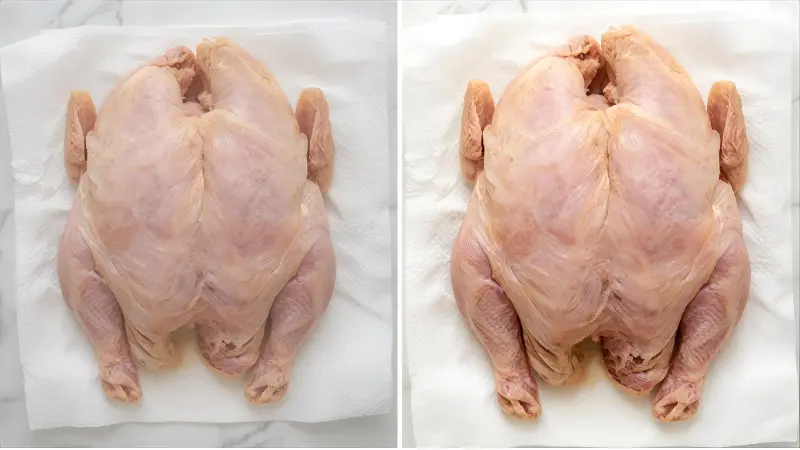
Remove your chicken from the fridge 30 minutes before cooking. Cold chicken = uneven cooking. Remove any giblets from the cavity (check both ends!). Pat the entire chicken dry with paper towels, both inside and out. This step is crucial for crispy skin. Moisture is the enemy of crispiness!
Step 2: Season Like You Mean It
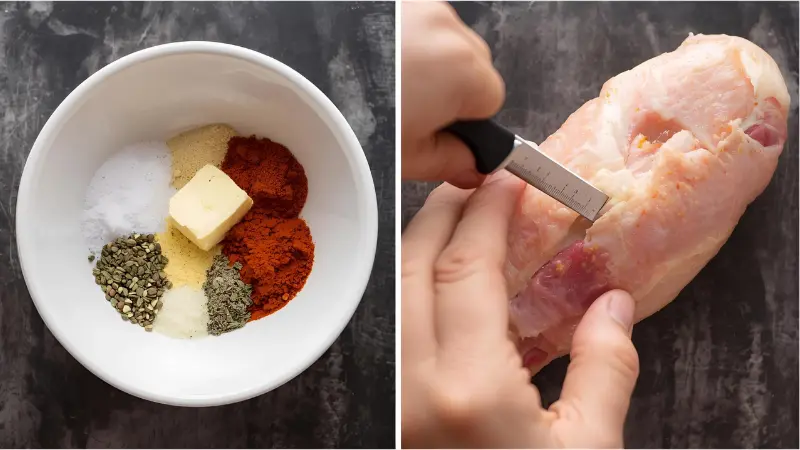
In a small bowl, mix your softened butter with salt, pepper, garlic powder, paprika, thyme, and rosemary. Now here’s the fun part: gently slide your fingers under the skin of the breast to separate it from the meat. Be careful not to tear it! Spread about half the butter mixture directly on the breast meat under the skin. Rub the remaining butter all over the outside of the chicken. Don’t be shy—get in there!
Step 3: Stuff and Truss
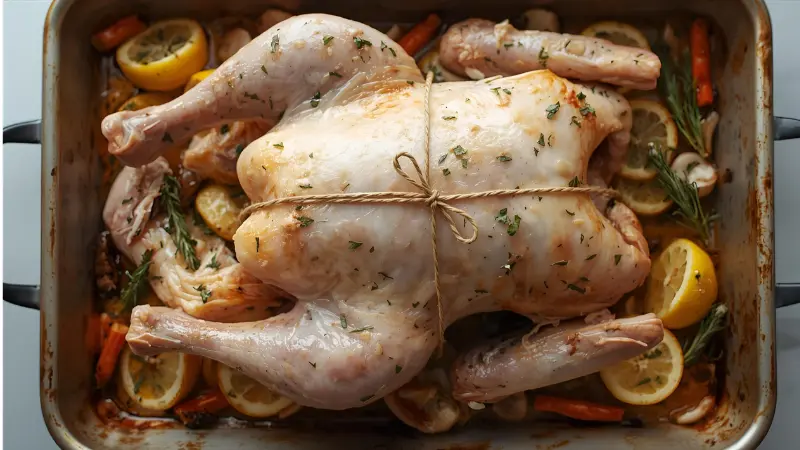
Stuff the cavity with lemon halves, smashed garlic cloves, and fresh herb sprigs. This creates aromatic steam that flavors the meat from the inside. Tie the legs together with kitchen twine and tuck the wing tips under the body. This helps everything cook evenly.
Step 4: Prepare Your Roasting Pan
Scatter your onions, carrots, and celery on the bottom of your roasting pan. These create a flavorful base for your chicken and provide an amazing side dish of veggies. Drizzle them with olive oil and season with a pinch of salt and pepper.
Step 5: Roast to Perfection
Preheat your oven to 220°C (425°F). Place the chicken breast-side up on top of the vegetables. Roast for 20 minutes at this high temperature—this jump-starts the crisping process.
After 20 minutes, reduce the heat to 190°C (375°F) and continue roasting for about 1 hour, or until the internal temperature reaches 74°C (165°F) when you insert a thermometer into the thickest part of the thigh (that’s the safe temp for chicken!). The juices should run clear, not pink.
Pro tip: Baste your chicken with the pan drippings every 25-30 minutes for extra flavor and moisture.
Step 6: Rest and Carve
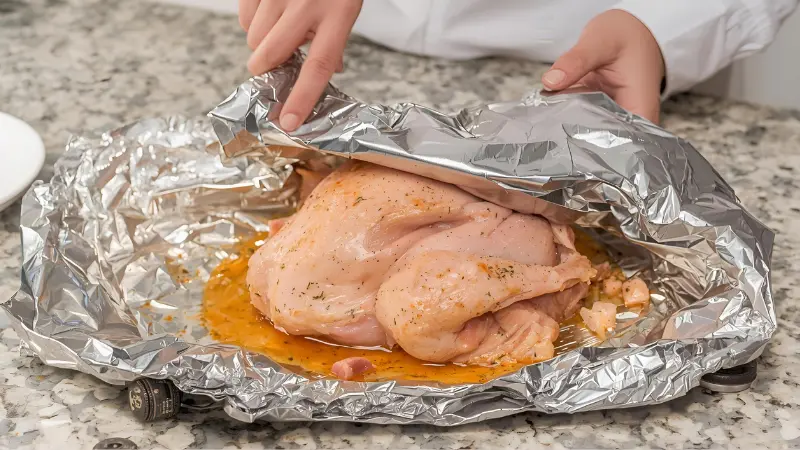
Once done, tent your chicken loosely with aluminum foil and let it rest for 15 minutes. This allows the juices to redistribute throughout the meat instead of spilling all over your cutting board. Your patience will be rewarded with juicier meat!
Carve and serve with those beautiful roasted vegetables.
Additional Tips for Roasted Whole Chicken Recipe
- Temperature is everything: Invest in a good meat thermometer. It takes the guesswork out completely. Dark meat can be cooked to a temperature of up to 77°C (170°F) and remain juicy.
- Dry skin = crispy skin: If you have time, let your seasoned chicken sit uncovered in the fridge for 2-4 hours or even overnight. The air circulation dries out the skin even more, creating ultra-crispy results.
- Rotate for even browning: If one side is browning faster than the other, rotate your pan halfway through cooking to ensure even browning.
- Save those drippings: The liquid gold at the bottom of your pan makes incredible gravy. Simply strain out the solids, skim off any excess fat, and simmer with a small amount of flour or cornstarch to thicken.
- Size matters: Cooking time varies with size. A smaller chicken (1.5 kg) might take a total of 1 hour, while a larger bird (2.5 kg) could require 1 hour and 45 minutes. Always check temperature, not just time.
- Flavor variations: Try different herb combinations for a unique taste experience—lemon and thyme, orange and sage, or even Asian-inspired with ginger and scallions.
Precautions for Roasted Whole Chicken Recipe
- Food safety first: Wash your hands thoroughly before and after handling raw chicken. Clean all surfaces and utensils that come into contact with raw poultry with hot, soapy water.
- Cook it through: Never rely solely on color. Always use a thermometer to ensure the thickest part of the thigh reaches 74°C (165°F). Undercooked chicken can harbor harmful bacteria, such as Salmonella.
- Don’t cross-contaminate: Keep raw chicken separate from other foods. Use different cutting boards for raw meat and vegetables.
- Check the cavity: Make sure there are no remaining giblets or neck inside before cooking. They’re usually in a small paper bag.
- Oven placement: Position your oven rack in the middle to ensure even heat circulation around the chicken.
- Hot pan warning: Your roasting pan will be extremely hot. Use thick oven mitts and exercise caution when basting or removing the dish from the oven.
Nutrition Facts for Roasted Whole Chicken Recipe
Per serving (approximately 150g of mixed white and dark meat with skin)
| Nutrient | Amount |
|---|---|
| Calories | 285 kcal |
| Protein | 27g |
| Total Fat | 19g |
| Saturated Fat | 6g |
| Carbohydrates | 0g |
| Dietary Fiber | 0g |
| Sugars | 0g |
| Cholesterol | 95mg |
| Sodium | 380mg |
| Potassium | 240mg |
| Vitamin A | 4% DV |
| Vitamin C | 2% DV |
| Calcium | 2% DV |
| Iron | 8% DV |
Note: Nutrition values are approximate and may vary based on chicken size and whether the skin is eaten. Removing the skin significantly reduces calories and fat.
Why This Recipe Works?
The science behind perfect roasted chicken is fascinating! Starting at a high temperature (220°C/425°F) renders the fat under the skin quickly, creating that initial crispiness. Dropping to 190°C (375°F) allows the interior to cook through without burning the outside.
Butter under the skin serves two purposes: it adds richness and creates a barrier that keeps breast meat moist. Breast meat is lean and dries out easily, so this extra fat is your insurance policy against dry chicken.
The vegetables on the bottom aren’t just sides—they elevate the chicken slightly, allowing air to circulate underneath for more even cooking. They also absorb drippings and prevent burning.
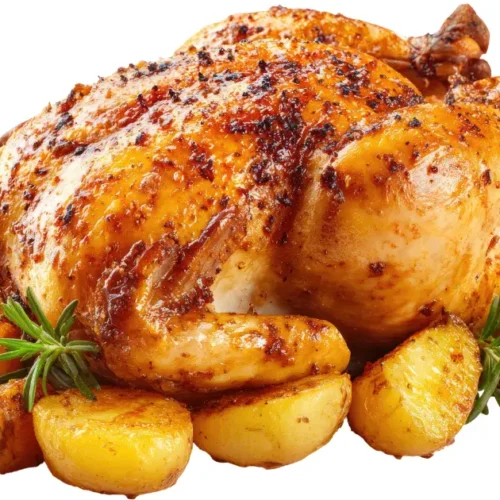
Roasted Whole Chicken Recipe: Your Golden, Crispy Sunday Dinner Made Easy
Equipment
- Roasting pan or large oven-safe skillet
- Kitchen twine (for trussing—fancy word for tying the legs together)
- Meat thermometer (your best friend for perfectly cooked chicken)
- Basting brush (or use a spoon)
- Aluminum foil
- Paper towels (for patting the chicken dry)
Ingredients
- 1 whole chicken (1.8-2 kg or about 4-4.5 lbs)
- 4 tablespoons unsalted butter, softened (about 56g)
- 2 teaspoons salt (12g)
- 1 teaspoon black pepper (2g)
- 1 teaspoon garlic powder (3g)
- 1 teaspoon paprika (2g)
- ½ teaspoon dried thyme (0.5g)
- ½ teaspoon dried rosemary (0.5g)
- 1 lemon, halved
- 4-5 garlic cloves, smashed
- Fresh herbs (optional: thyme, rosemary sprigs)
- 2 tablespoons olive oil (30ml)
Instructions
- Remove your chicken from the fridge 30 minutes before cooking. Cold chicken = uneven cooking. Remove any giblets from the cavity (check both ends!). Pat the entire chicken dry with paper towels, both inside and out. This step is crucial for crispy skin. Moisture is the enemy of crispiness!
- In a small bowl, mix your softened butter with salt, pepper, garlic powder, paprika, thyme, and rosemary. Now here’s the fun part: gently slide your fingers under the skin of the breast to separate it from the meat. Be careful not to tear it! Spread about half the butter mixture directly on the breast meat under the skin. Rub the remaining butter all over the outside of the chicken. Don’t be shy—get in there!
- Stuff the cavity with lemon halves, smashed garlic cloves, and fresh herb sprigs. This creates aromatic steam that flavors the meat from the inside. Tie the legs together with kitchen twine and tuck the wing tips under the body. This helps everything cook evenly.
- Scatter your onions, carrots, and celery on the bottom of your roasting pan. These create a flavorful base for your chicken and provide an amazing side dish of veggies. Drizzle them with olive oil and season with a pinch of salt and pepper.
- Preheat your oven to 220°C (425°F). Place the chicken breast-side up on top of the vegetables. Roast for 20 minutes at this high temperature—this jump-starts the crisping process.After 20 minutes, reduce the heat to 190°C (375°F) and continue roasting for about 1 hour, or until the internal temperature reaches 74°C (165°F) when you insert a thermometer into the thickest part of the thigh (that’s the safe temp for chicken!). The juices should run clear, not pink.
- Once done, tent your chicken loosely with aluminum foil and let it rest for 15 minutes. This allows the juices to redistribute throughout the meat instead of spilling all over your cutting board. Your patience will be rewarded with juicier meat!
Notes
Storage and Leftover Ideas
Store leftover chicken in an airtight container in the refrigerator for up to 4 days. The meat freezes beautifully for up to 3 months.
Leftover magic: Shred it for chicken salad, tacos, or use it in soup. Toss with pasta and veggies. Make chicken fried rice. The possibilities are endless!
Don’t throw away that carcass! Simmer it with water, onions, carrots, and celery for homemade chicken stock. It’s liquid gold for soups and risottos.
Video
Conclusion
You’ve just mastered one of the most essential recipes in any home cook’s arsenal. A perfectly roasted whole chicken is impressive yet surprisingly simple, budget-friendly yet elegant enough for company. The combination of crispy skin, juicy meat, and those pan-roasted vegetables creates a complete meal that never gets old.
The beauty of this recipe is its flexibility. Once you’ve nailed the basic technique, you can experiment with different seasonings, herbs, and aromatics to make it your own. Before you know it, you’ll be roasting chickens without even glancing at a recipe.
So preheat that oven, grab a chicken, and get roasting. Your kitchen is about to smell absolutely amazing, and dinner is going to be spectacular. You’ve got this!
People Frequently Ask Questions
Can I roast a frozen chicken?
Nope, you need to thaw it entirely first. A frozen chicken won’t cook evenly, and the outside might burn before the inside reaches a safe temperature. Thaw in the refrigerator for 24 hours per 2kg of chicken.
Why is my chicken skin not crispy?
Moisture is the culprit! Ensure the chicken is dehydrated before seasoning. Also, try air-drying it in the fridge for a few hours. Starting at a high temperature (220°C/425°F) for the first 20 minutes also helps achieve crispiness.
Do I really need to let it rest after cooking?
Yes! Resting for 15 minutes allows the juices to redistribute throughout the meat. If you carve immediately, all those delicious juices will run onto your cutting board instead of staying in the meat. Patience = juicier chicken.
Can I skip trussing the chicken?
You can, but trussing helps the chicken cook more evenly and keeps the breast meat from drying out. It only takes a minute and makes a real difference. If you don’t have twine, tuck the wings under and keep the legs close to the body.
What if I don’t have a meat thermometer?
While a thermometer is the most reliable method, you can pierce the thigh with a knife—if the juices run clear (not pink), it’s done. The leg should also wiggle easily in its socket. But seriously, thermometers are inexpensive and eliminate the guesswork.
Can I stuff my chicken with stuffing?
It’s safer to bake stuffing separately. Stuffing inside the chicken takes longer to reach a safe temperature (74°C/165°F), which can lead to overcooked, dry meat. Stick with aromatics like lemon, herbs, and garlic inside the cavity for flavor without the risk.
How do I determine the correct size chicken to buy?
Plan for about 350-450g (¾-1 lb) per person if you want leftovers. A 1.8- to 2-kilogram chicken typically serves 4-6 people, with some leftovers. Smaller chickens (1.5kg) are perfect for a family, while larger birds (2.5 kg can feed 6-8.
My oven temperature seems off. What should I do?
Oven thermometers are cheap and incredibly helpful! Many ovens run hot or cold. If your chicken is browning too quickly, tent it with foil. If it’s taking forever, your oven might be running cool—increase the temperature by 10-15°C.
Can I use this recipe for a kosher chicken?
Absolutely! Kosher chickens are already salted during processing, so reduce the added salt by about half. Otherwise, follow the recipe exactly as written.
What’s the best way to carve a roasted chicken?
Start by removing the legs (cut through the joint where the thigh meets the body). Separate the drumsticks from the thighs. Remove the wings. Finally, slice the breast meat off the bone into thin slices. Watch a quick video online if you’re unsure—it’s easier than it sounds!